


Cricket Ball Dimensions & Buyers Guide
Everything you need to know about cricket balls
Cricket as a sport has evolved significantly since its inception with major changes being made to cricket bats, game formats and rules over the years, but cricket balls have perhaps surprisingly not changed that much.
In this guide we will take an in-depth look at cricket balls, covering the history of balls, cricket ball materials, cricket ball sizes and weights, types of cricket balls, and more. After reading our guide you should be well placed to buy cricket balls with confidence.
THE HISTORY OF CRICKET BALLS IN AUSTRALIA
Cricket balls have been a part of Australian sporting history since the early 1800s. The game of cricket arrived with British settlers and the balls were typically made using a cork base wrapped in string, which was typically dyed red. Due to Australia’s climate, these balls tarnished very quickly overtime.
Over the decades, manufacturers began to construct more durable balls to better suit the hotter climates, harder pitches and longer days out in the sun. As cricket in Australia grew from being a casual game into an elite sport, so did the development of the balls. Seam height, leather treatment and internal winding methods were refined and improved to provide consistency for longer format matches.
Fast forward to today, and cricket balls used in Australia are made to strict standards for weight and size. The red ball remains the standard for test matches, but due to the game’s expansion, the white balls are used for limited overs and the pink for day-night tests. Each colour brings its own set of challenges, especially when it comes to visibility and wear, which is why there is still on-going innovations to improve them.
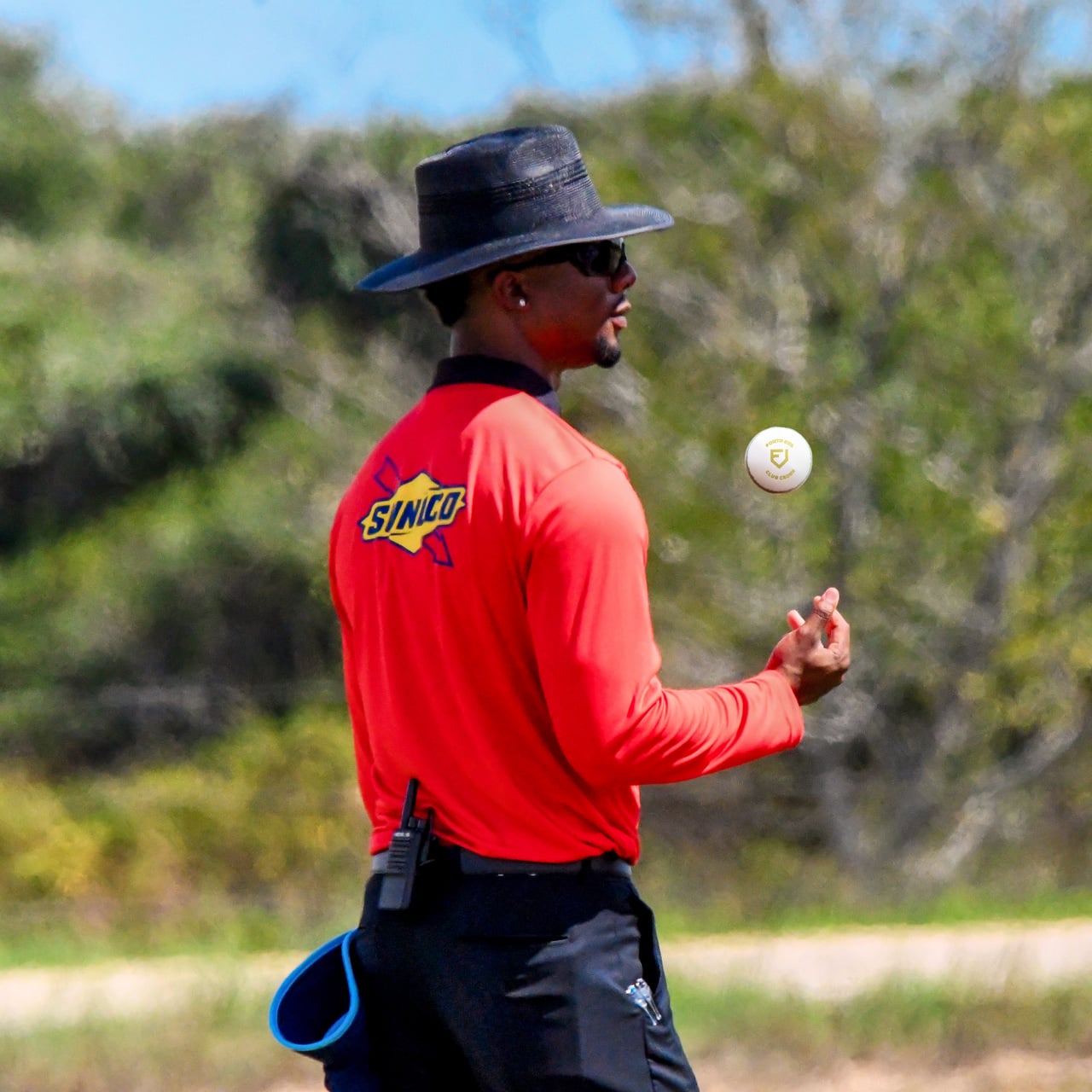
WHAT IS A CRICKET BALL MADE OF?
A traditional cricket ball is very carefully constructed to be durable, performance focused and consistent for long periods of play. While the design may vary between manufacturers, the core materials of a cricket ball remain the same across the industry.

Core - At the heart of the cricket ball is the cork centre which is often reinforced or mixed with rubber. The core provides the bounce and hardness of the cricket ball. The cork is compressed under high pressure into a hard sphere which acts as the ball’s foundation.
Winding – Around the cork centre, there are layers of tightly wound string or yarn that are added. The winding adds weight and helps the cork centre hold its shape; it can also affect how the ball reacts when being hit by a bat. The rewinding process is crucial, as it ensures that the ball retains its shape after hours of use.
Leather Casing – The outer layer of a cricket ball is made using high quality leather which is usually dyed red, white or pink depending on the format. During construction, the leather is cut into four pieces and then shaped and stitched together in two halves. The colouring is done using a special dye and the surface is polished using grease or wax to improve durability and shine.
Seam – The stitched seam is made from high tensile thread and plays a key role in swing, grip and overall aerodynamics. Most cricket balls have a prominent central seam, with up to six rows of stitching. This doesn’t only hold the leather together but also affects how bowlers can control the ball in the air and off the pitch.
Other types of cricket ball materials
Not all cricket balls are made with leather; there are plastic and rubber cricket balls which are widely used across Australia. These are mainly used at junior or beginner level as well as for casual play. They are usually softer, safer and more affordable making them the ideal backyard or school cricket ball.
Plastic Cricket Balls are lightweight and hollow inside, and they are designed for fun and informal cricket games. Ideal for younger kids who are just learning the fundamentals of the game or for a quick hit in the park. There are also training balls which are made from heavy duty plastic like our FORTRESS Incrediballs which offer very similar characteristics to the Royal Crown Cricket Balls. These balls are most commonly used indoor for practice.
Rubber Cricket Balls are slightly heavier and more durable than plastic balls. Although they are less common, they are perfect for training and indoor cricket as they offer a good balance between bounce and safety. Some rubber ball replicate cricket balls, whilst others have more unique designs like our swing cricket ball which is half cricket balls and half tennis ball. These balls are used for various training drills.

DIMENSIONS AND WEIGHTS OF A CRICKET BALL
In Australia, cricket ball sizes and weights follow the laws of cricket which are set out by the Marylebone Cricket Club (MCC) and adopted by Cricket Australia for official competitions.

Men's Cricket Balls
Cricket balls used in official Australian competitions must meet specific size and weight regulations, which can vary depending on the level and category of play. For men’s cricket, the standard ball must weigh between 155.9 and 163.0 grams, with a circumference of 22.4 to 22.9 centimetres. These measurements are to ensure that there is a consistency in the bounce, swing and durability of the ball for long format matches like tests.
Women’s Cricket Balls
In the women’s cricket game, the ball is slightly smaller and lighter. The weight for a women’s cricket ball is between 140 and 151 grams and they should measure 210 to 225 millimetres in circumference. This size offers a better grip and a more comfortable handling, which supports technique and safety during high-performance level.
Kids Cricket Balls
Junior players under 13 years old typically use lighter and smaller balls than both men and women. Kids cricket balls weigh between 133 and 144 grams with a circumference of 204 to 210 millimetres. These lighter balls help young players develop their skills without the added strain or risk of injury that can come with using a full-sized ball.
| Category | Weight | Circumference |
|---|---|---|
| Men’s Cricket | 155.9-163 grams | 22.4-22.9cm |
| Women’s Cricket | 140–151 grams | 21–22.5cm |
| Junior Cricket (U13) | 133–144 grams | 20.4–21 cm |
WHY ARE CRICKET BALL DIFFERENT COLOURS?
When it comes to the colour of a cricket ball, it’s not just about the looks. The colour plays a key role in visibility, especially if lighting conditions change.
- Red Balls – They are traditionally used in test matches and longer form games which are played during the day. The red holds up well in sunlight, maintaining its visibility on green grass.
- White Balls – These are used in limited overs formats (like one-day internationals or T20 games), which often see games played under lights in the evenings. This makes the red ball hard to see, especially with players wearing coloured uniforms, so white balls became the standard for shorter formats.
- Pink Balls – Pink cricket balls are a more recent innovation; they are designed for day night test matches under lights. Although white balls are typically used under lights, with players wearing white uniforms, the ball may clash with the white clothing, so the pink strikes a balance between, offering good visibility.
- Other colours – other coloured balls like orange and yellow are normally used for indoor cricket or very low light conditions due to their high visibility.

CRICKET BALL TYPES
At Net World Sports, we carry a comprehensive range of cricket balls. From our top of the range tournament balls which offer premium quality to our plastic and rubber range of training & indoor cricket balls
FORTRESS Royal Crown Cricket Balls [4x Colours]
Suitable for – County and test matches
Colours - Red, Pink, Orange & Pink
Weights - Men’s – 156g, Women’s – 142g & Kids – 135g
Material - Grade 1 4-piece cow-hide leather, Portuguese cork & rubber core
These hand stitched cricket balls are perfect for elite tournaments including test matches and county league cricket games.
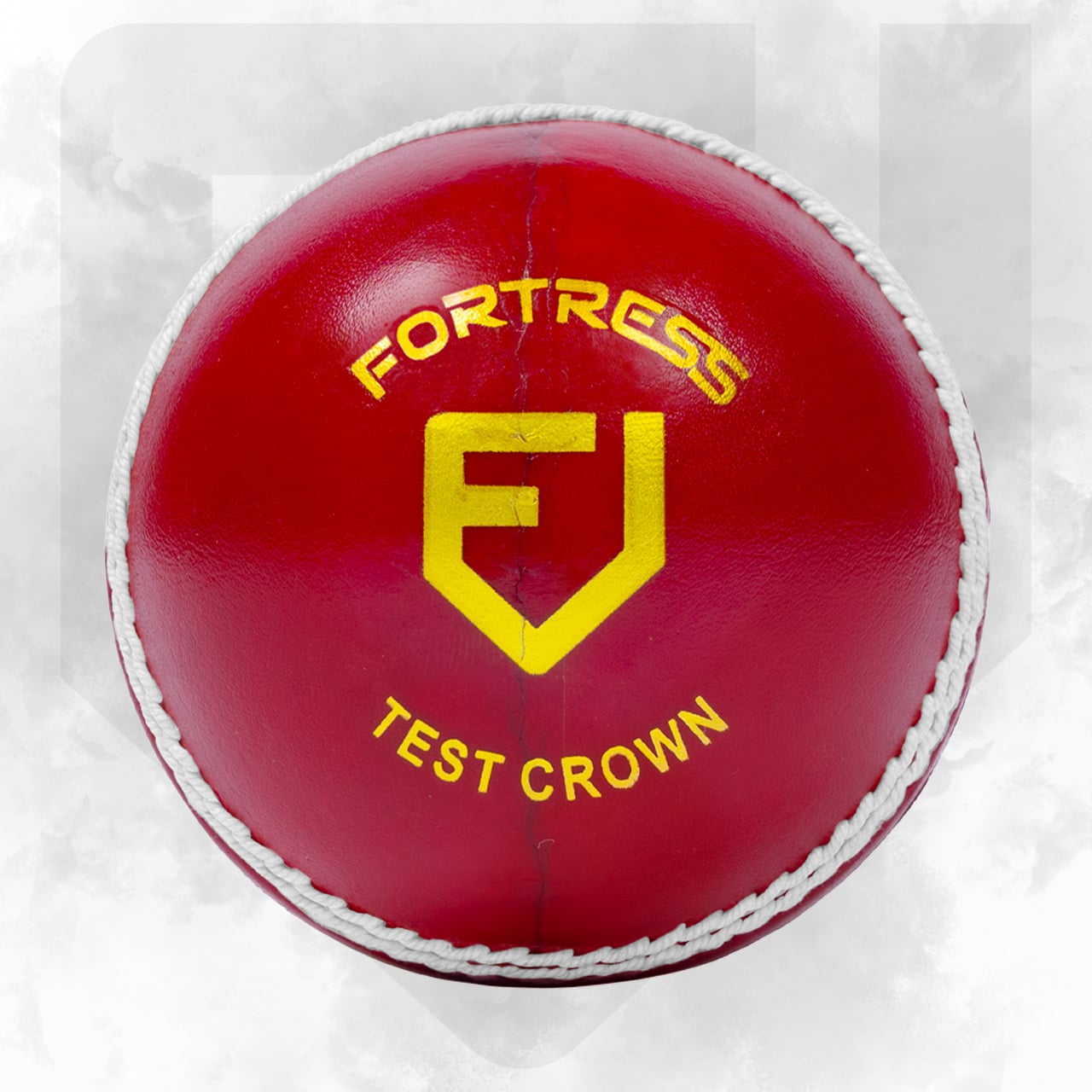
FORTRESS Machine Stitched Royal Crown Cricket Balls [4x Colors]
Suitable for – County & test matches
Colours - Red, Pink, Orange & Pink
Weights - Men’s – 156g, Women’s – 142g & Kids – 135g
Material - Grade 1 4-piece cow-hide leather, Portuguese cork & rubber core
These machine stitched cricket balls are ideal for any elite tournament. They are durable and feature a machine stitched prominent seam.
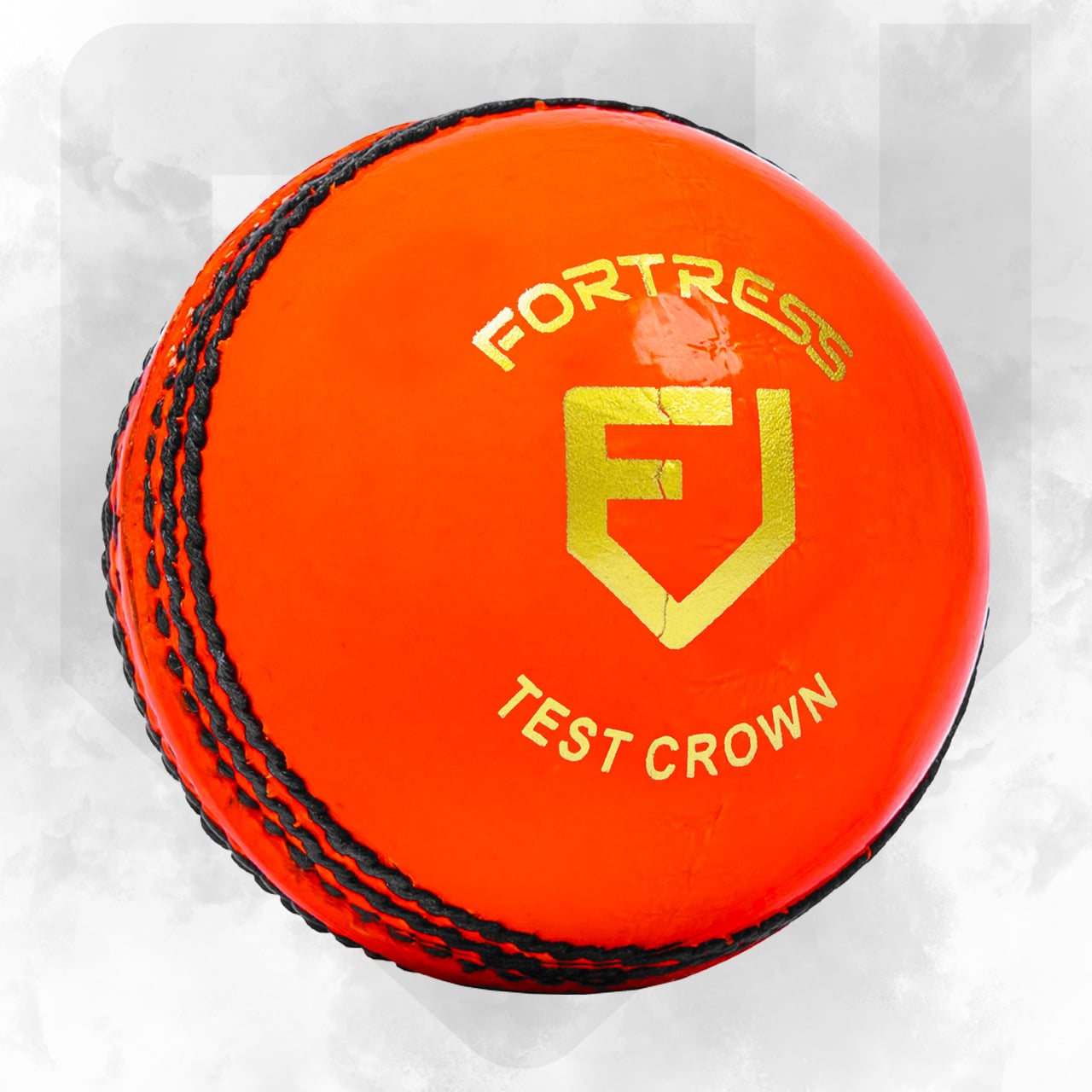
FORTRESS Match Crown Cricket Balls [Red/White/Pink]
Suitable for – County matches
Colours - Red, Pink & White
Weights - Men’s – 156g, Women’s – 142g & Kids – 135g
Materials - Grade 1 cow-hide leather, Cork & rubber core
Our match crown cricket balls are perfect for any county match. They are renowned for their supreme durability and longevity to withstand long cricket games.
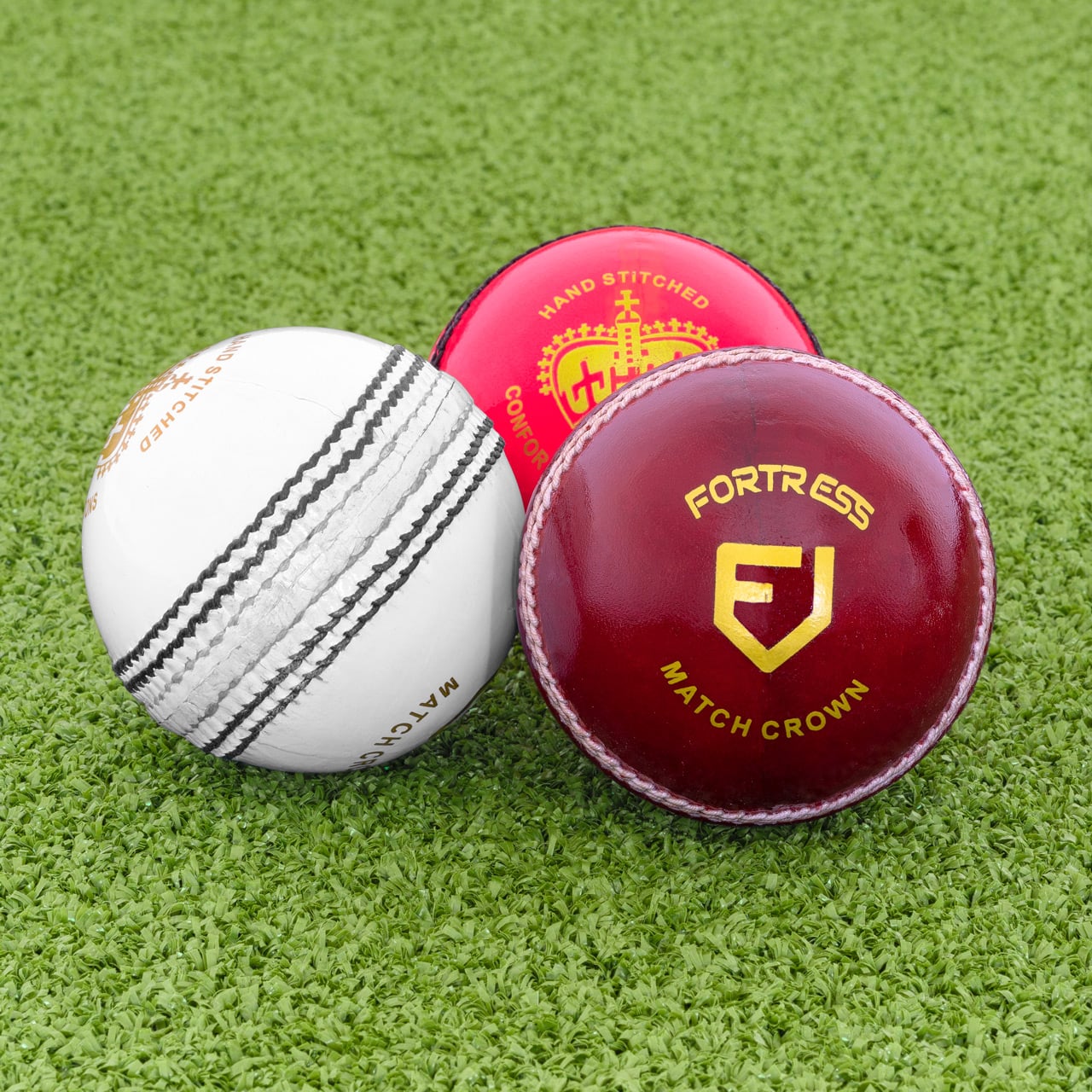
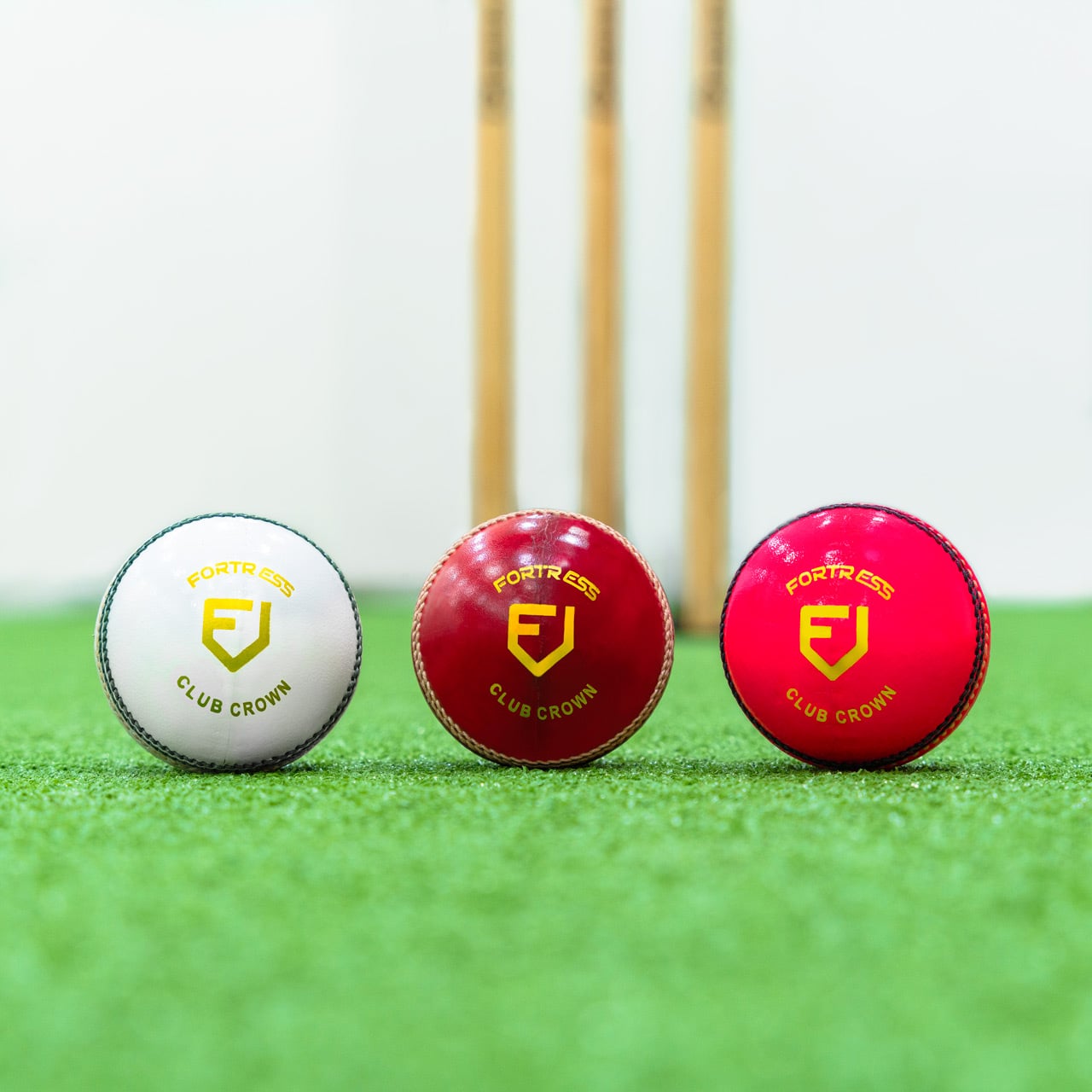
FORTRESS Club Crown Cricket Balls [Red/White/Pink]
Suitable for - Club and school level training & matches
Colours - Red, Pink & White
Weights - Men’s – 156g, Women’s – 142g & Kids – 135g
Material - Grade 1 cow-hide leather, Cork & rubber core
Our club cricket ball is perfect for club and school training and matches. They are durable and affordable making them accessible for everyone.
FORTRESS Indoor Pro Cricket Balls
Suitable for - Indoor Leagues & Tournaments
Weight – 113 grams
Materials - Traditional yellow leather, PU-injected core
Our pro indoor balls are designed with a softer PU injected core which makes the ball more suitable for indoor play.

FORTRESS Cricket 'Incrediball' Practice Balls [Box of 6]
Suitable for – Training sessions at all levels
Colour - Red, Pink & White
Weights – Senior – 94 grams, Junior - 90 grams
Materials - Heavy duty plastic exterior, High-quality foam core
Our FORTRESS Incrediballs perfectly replicates our match balls and is ideal for training sessions and indoor matches.
![FORTRESS Cricket 'Incrediball' Practice Balls [Box of 6]](https://nwscdn.com/media/wysiwyg/resized-image-Promo_-_2023-04-14T121556.048.jpg "FORTRESS Cricket 'Incrediball' Practice Balls [Box of 6]")
Now that you have read our complete cricket ball guide, you should have a better understanding of what cricket ball you need. Net World Sports offers a wide range of cricket equipment including cricket batting equipment, wicketkeeping gear, stumps, cages and mats plus much more.