

Tennis Ball Buying Guide
A complete guide to choosing the right tennis ball
While you could be forgiven for assuming all tennis balls are the same there are some significant differences which differentiate the different types of tennis balls available to buy. This comprehensive guide will provide you with everything you need to know about tennis balls so you can buy tennis balls with confidence.
TENNIS BALL DIMENSIONS AND WEIGHTS
How big is a tennis ball?
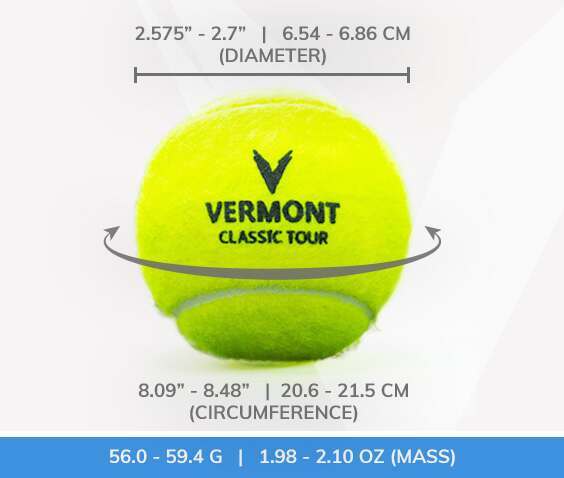
To meet International Tennis Federation (ITF) standards, a regulation tennis ball should have a diameter between 6.5 and 6.85 centimetres.
Most standard, adult tennis balls have a circumference of around 20.96 centimetres. However, this can vary slightly between 20.6 and 21.5 centimetres depending on the brand and type of ball.
The ITF also has strict rules about the size of logos on tennis balls. The height of a logo can't be more than 3.2 centimetres, and the width can't exceed 5.2 centimetres.
For younger players, tennis balls come in different sizes. For instance, Vermont Stage 3 balls that are designed for players 8 years and under, are larger and softer than standard adult balls.
How much does a tennis ball weigh?
A standard tennis ball weighs between 56.0 and 59.4 grams. This weight range is set by the International Tennis Federation (ITF) to ensure consistency in the game.
TENNIS BALL COLORS AND MATERIALS
Why are tennis balls yellow?
The standard colour for tennis balls is yellow and this has been the case since 1972 when the International Tennis Federation (ITF) made the switch from the previously used white or black tennis balls.
The reason for the change was because when colour television started becoming popular it was hard to see the black or white tennis balls ball clearly on the screen, especially against certain court surfaces.
To fix this, the International Tennis Federation (ITF) did some research and found that a bright yellow ball was the most visible on TV. So, in 1972, they made the switch, and the rest is history!
What are tennis balls made of?
Today's tennis balls are a blend of technology and tradition. They're made up of a rubber core, pressurised gas, synthetic felt, and glue.
The manufacturing process starts by moulding two rubber halves to form the ball's core. This core is then filled with pressurised gas and covered with synthetic felt.
To meet the strict standards set by the International Tennis Federation (ITF), a tennis ball, when dropped from 100 inches onto a concrete surface, should bounce between 53 and 58 inches. This level of bounce is achieved by maintaining a pressure of 27-29 PSI.
In contrast, the early tennis balls of the 1500s were a much simpler affair, constructed from leather and tightly packed wool.
PRESSURISED VS PRESSURELESS TENNIS BALLS
Pressurised tennis balls
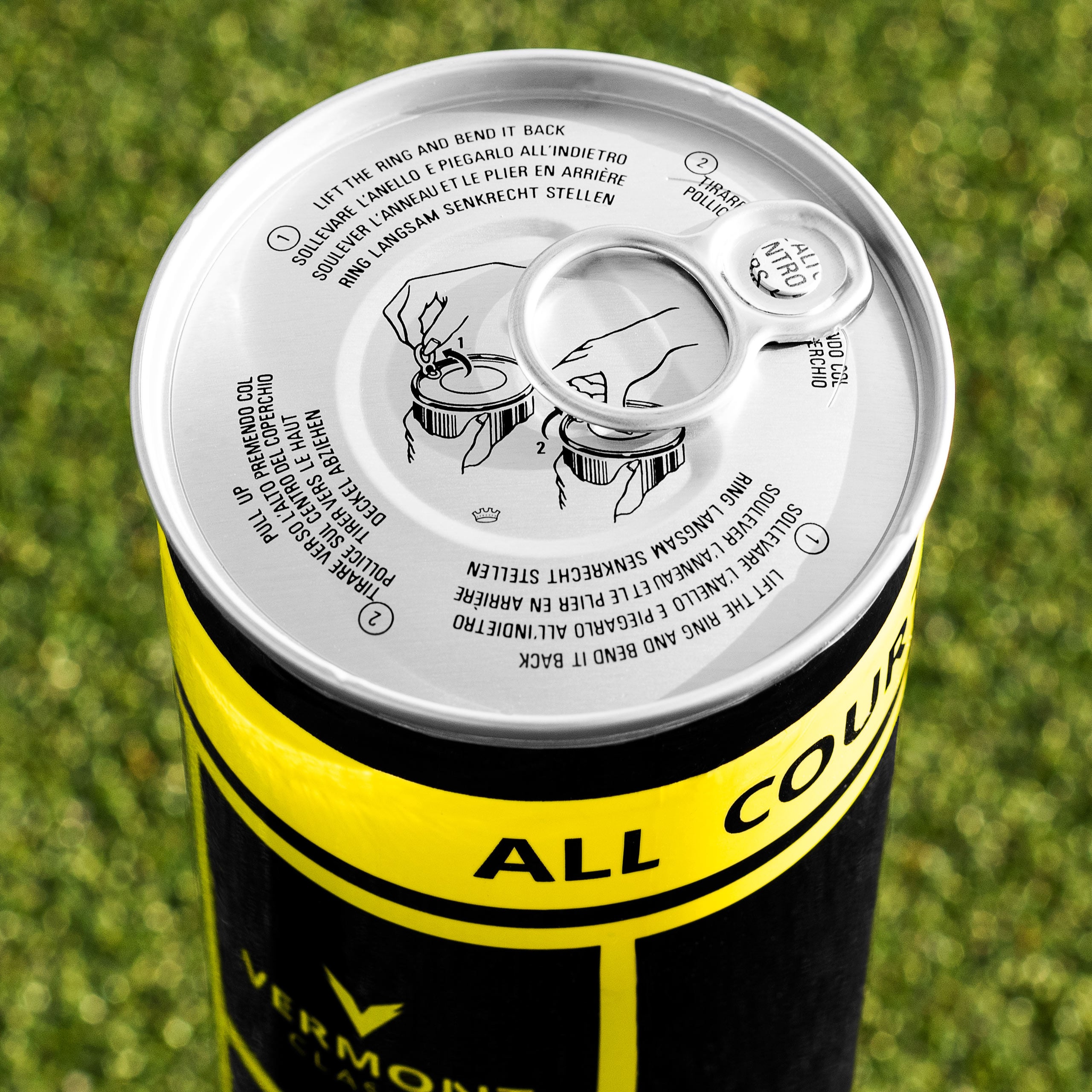
A pressurised tennis ball is filled with air to give it its characteristic bounce. This air pressure gradually decreases over time, which slowly impacts the ball's performance. Typically, these tennis balls arrive packed in a pressurised carton, and once opened they begin to lose pressure. Pressurised tennis balls are used in all elite tennis tournaments around the world including the Australian Open, as they have the performance characteristics required for professional play.
Pressureless tennis balls
Pressureless tennis balls are a durable and consistent option. They don't rely on air pressure for their bounce, making them less prone to losing performance over time. This means they offer a consistent feel and bounce, even as they age, so they don’t need replacing as frequently as pressurised tennis balls. While they might not have the same lively bounce as a fresh pressurised ball, pressureless balls are a great choice for practice, especially for beginners.
DIFFERENT TYPES OF TENNIS BALLS
Although tennis balls look very similar and tend to be the same size, there are many differences which can impact the way you play. For example, as mentioned earlier, there are pressured and pressureless balls which have completely different performance capabilities which could positively or negatively affect your game. So, choosing the right ball is key.
Tournament Quality Balls
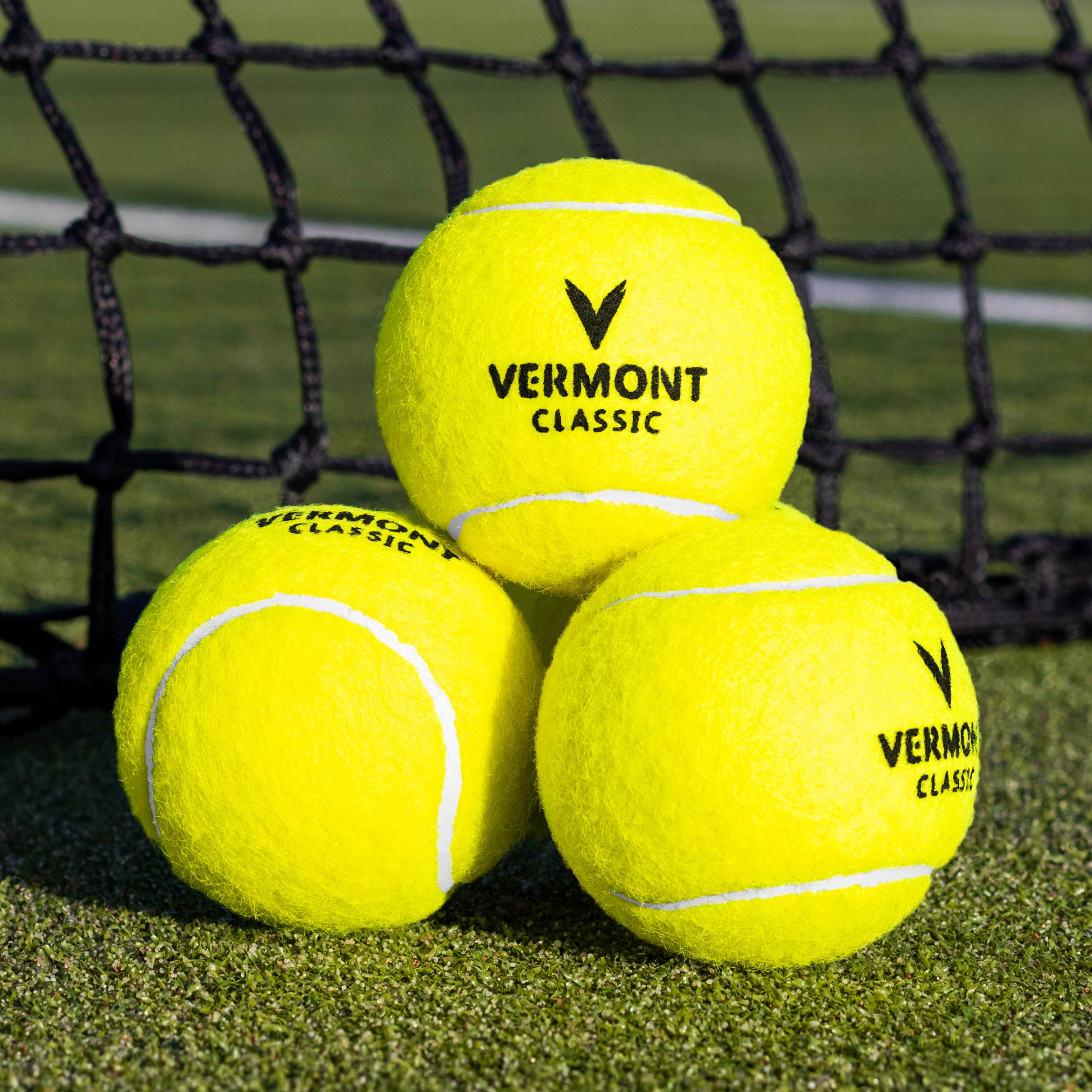
Tour tennis balls are pressurised to ensure that the bounce is at the peak of its performing abilities. Tour balls replicate the specifications of balls which you will find are used in the Australian open. Competition tennis balls tend to outperform practice balls; however, these balls are less durable and more expensive. This means they are better suited to competition use, although they can be used for casual play if your budget allows.
Our Vermont Classic Tour Balls are perfect for tournament play. Packaged in pressurised cartons, they guarantee top-notch performance. If you're training for a big tournament, using these ITF-approved balls can help you simulate real-match conditions. Our tour balls are affordable and available in a variety of pack sizes.
Training Tennis Balls
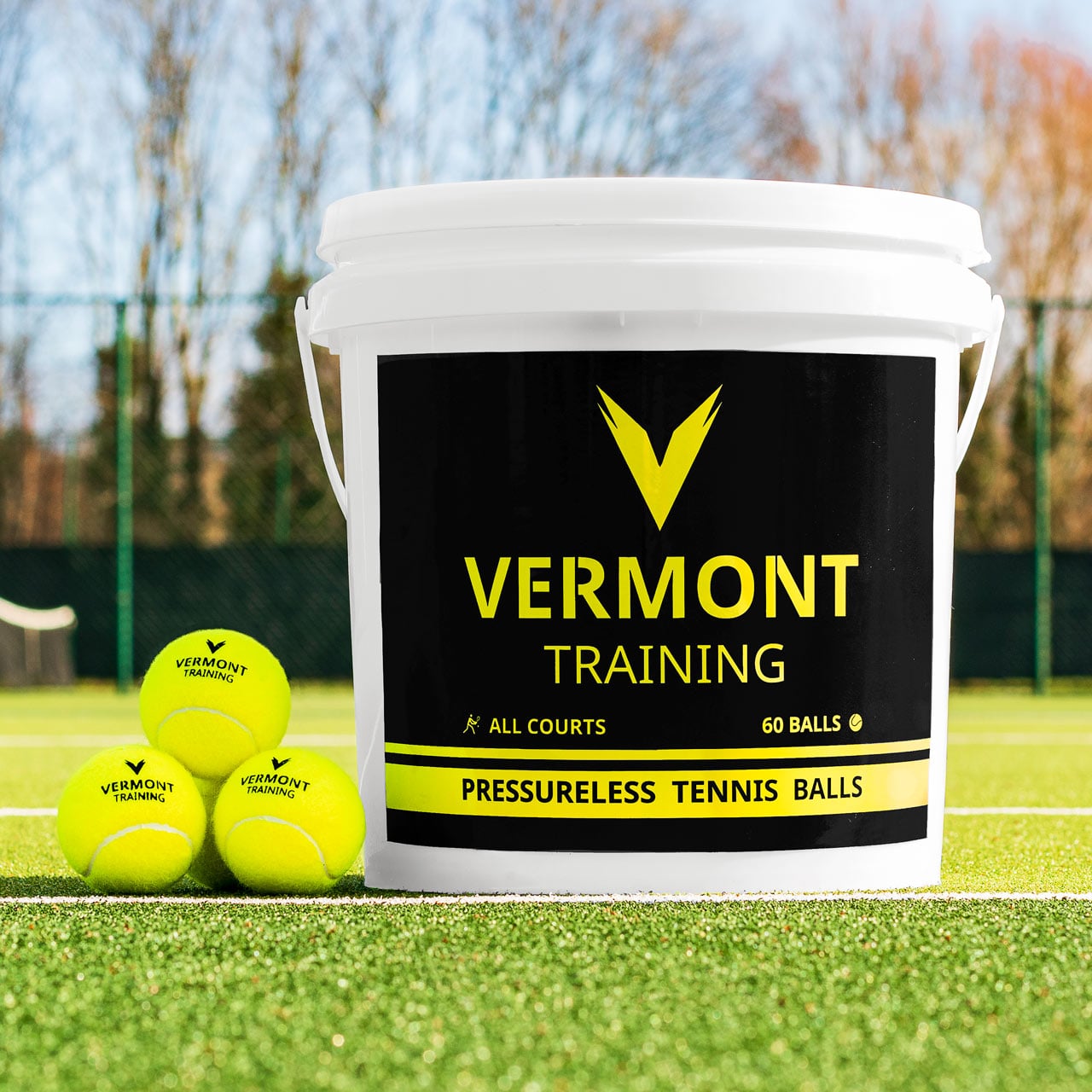
Practice tennis balls are typically pressureless, making them durable and long-lasting. These types of balls are great for intense training sessions and tennis ball machines. Instead of using air pressure, these balls have a rubber shell. The bounce with pressureless tennis balls is less consistent than pressurised balls, making them unsuitable for competitive tennis matches. However, some people use this to their advantage in training matches as it can help to boost your awareness and reaction times.
Our Vermont Training balls are the perfect option for schools, clubs and tennis coaches. These balls can help develop players of all abilities and can be used on any surface.
Kids Tennis Balls
It wasn’t that long ago that tennis coaches and teachers would reach for old tennis balls when introducing kids to the game. Balls that had lost some of their bounce made them a better fit for beginners. These days, tennis equipment has come a long way, and we’ve now got junior tennis balls that are specially designed to match a child’s age, size, and skill level. They’re softer, lighter, bounce lower, and travel more slowly through the air to make tennis more fun and less frustrating for young players.
These balls are used as part of Hot Shots Tennis, Tennis Australia’s official kids’ program which is designed to help children learn to rally, improve their technique, and build confidence as they progress.
| VERMONT Tennis Balls for Junior players | |||
|---|---|---|---|
| AGE | STAGE | BALL DIAMETER | BALL COLOUR |
| 8 and Under | 3 | 7.5cm | Red |
| 8 & 9 | 2 | 6.0 - 6.8cm | Orange |
| 9 & 10 | 1 | 6.54 - 6.86cm | Green |
| 10 and above | Senior | 6.54 - 6.86cm | Yellow |
Kids aged between 4 and 8 use stage 3 red tennis balls which are larger, lighter and slower through the air than the yellow tennis balls used by adults. The lower bounce makes it easier for younger players to hit groundstrokes.
Stage 2 orange balls are used by kids aged 8 and 9. 50% softer and significantly lighter than standard yellow tennis balls, they help kids continue their development and build on the basics learnt using the red balls.
Green stage 1 tennis ball are used by players aged 9 and 10 before they make the step-up to using regulation tennis balls. 25% slower than standard tennis balls, stage 1 balls are ideal for bridging the gap between kids' tennis balls and senior tennis balls.
Foam Tennis Balls
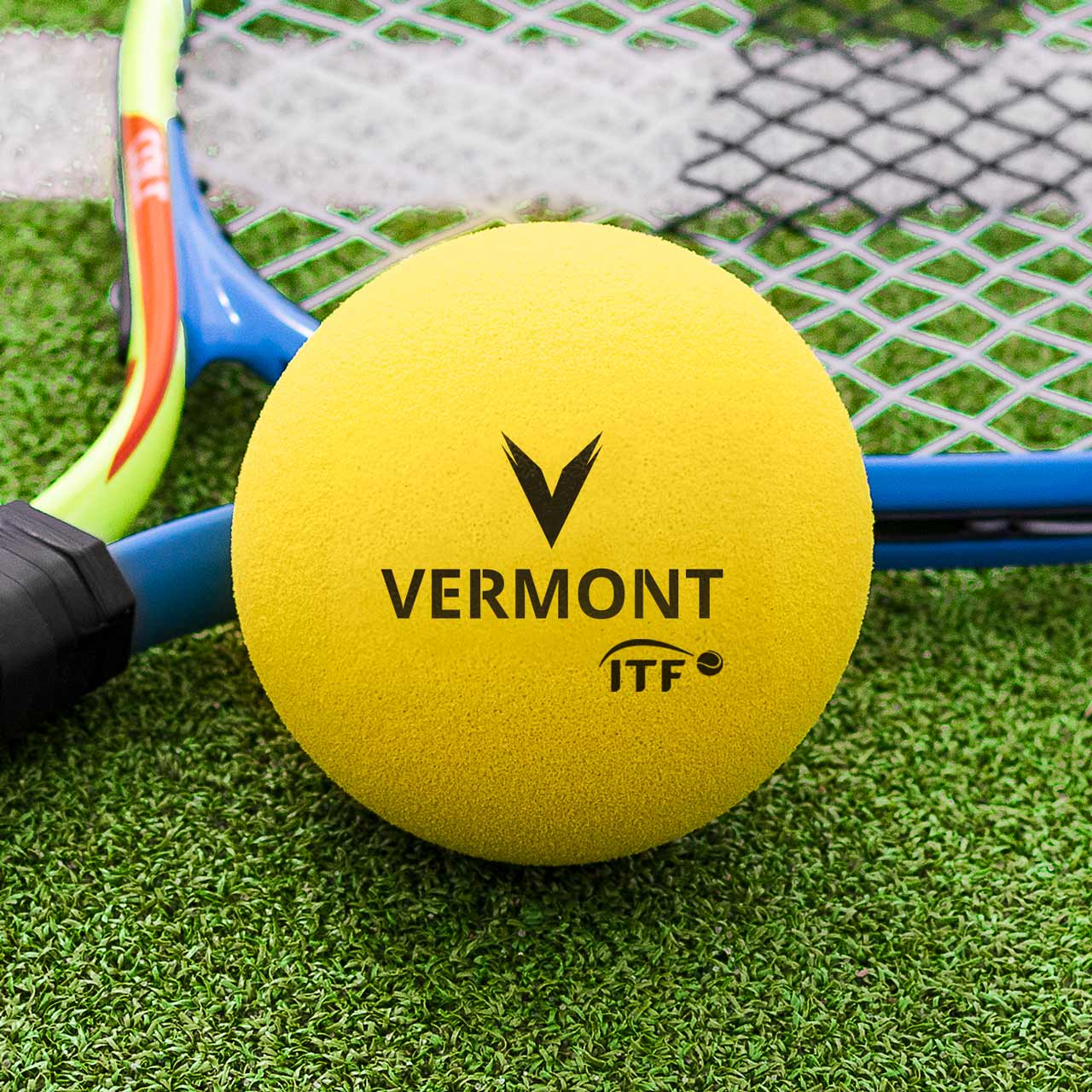
Foam tennis balls are ideal for young players and beginners. Designed for junior tennis, they have a low bounce and are lightweight, allowing children to develop their skills at their own pace. These softer balls also eliminate the risk of injury, ensuring a safe and enjoyable experience.
Our ITF-approved foam tennis balls are perfect for kids aged 8 and under. Available in 80mm (matchplay) or 90mm (practice) sizes, they come in packs of 3, 12, or 72.
OTHER TENNIS BALL FAQ’S
How often do you change balls in tennis?
To ensure a consistent and enjoyable game, professional tennis matches typically use a set of nine balls. These balls are changed every nine games to maintain optimal bounce and performance. However, factors like weather conditions, court surface, and the intensity of play can influence the need for more frequent ball changes.
For amateur players most won’t change balls with that frequency. How often you do need to change tennis balls will depend on the frequency you play, but you shouldn’t need to change them during the same session.
How many tennis balls are used at the Australian open?
According to Tennis Australia more than 86,400 tennis balls were used during the 2025 Australian Open across the 1,098 that were officially scored.
Where can you buy tennis balls?
Our renowned Vermont brand is your one stop shop for a variety of quality tour, training and foam tennis balls. We also offer tennis rackets, nets, posts and a kids tennis range so you’re sure to find everything you need at Net World Sports.